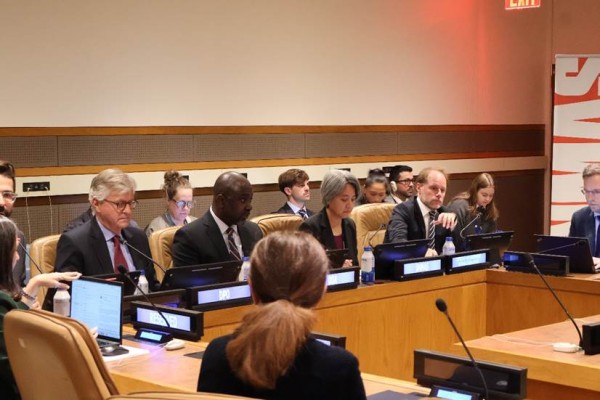
From 20 to 22 January 2026, in Ashgabat, Turkmenistan, the Implementation Support Unit (ISU) of the Biological Weapons Convention (BWC) within the United Nations Office for Disarmament Affairs (UNODA) organized the first-ever national workshop on the implementation of the BWC in the country. The workshop was convened in close cooperation with the Organization for Security and Cooperation in Europe (OSCE) and the Government of Turkmenistan at the OSCE Centre in Ashgabat, with financial support from the United Kingdom of Great Britain and Northern Ireland and the European Union.
The workshop was designed to strengthen participants’ understanding of the Convention, including the rights and obligations of States Parties, and to support its effective national implementation. It placed emphasis on the exchange of good practices concerning the preparation and submission of annual Confidence-Building Measures (CBMs), while also informing national stakeholders of available capacity-building opportunities to enhance biosafety and biosecurity.
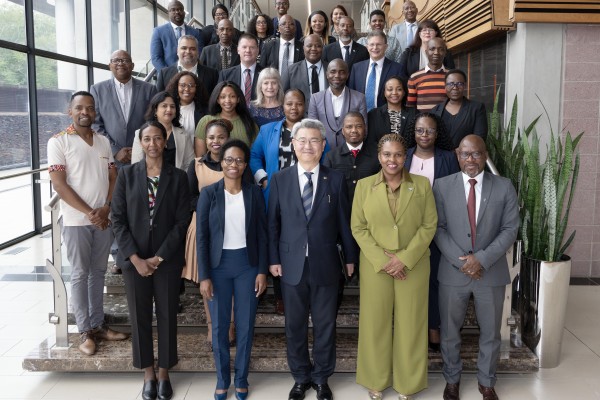
The workshop brought together 34 participants, including 23 national representatives from 11 different institutions in Turkmenistan, such as the State Frontier Service, Ministry of Interior, Ministry of National Security, Ministry of Defence, Ministry of Foreign Affairs, Ministry of Health and Medical Industry, Ministry of Trade, Ministry of Agriculture, Ministry of Environment, State Customs and the National Academy of Sciences. Representatives from the UK Embassy and the EU Delegation in Ashgabat also participated, alongside nine regional and international experts from Hungary, Tajikistan, the OSCE Secretariat in Vienna, the OSCE Centre in Ashgabat, the EU CBRN Centres of Excellence (CBRN COE) Initiative for Central Asia, the International Centre for Genetic Engineering and Biotechnology (ICGEB), the World Health Organization (WHO) and the UNSCR 1540 Support Unit.
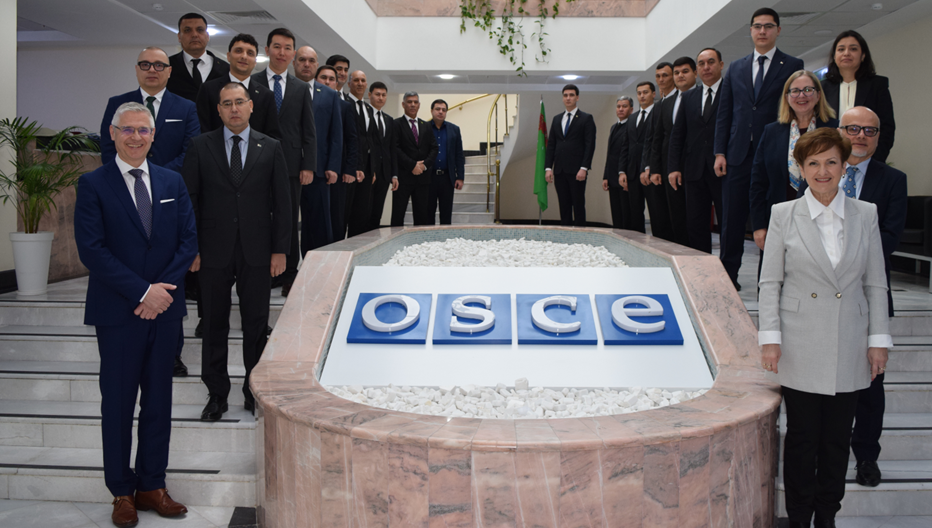
During the opening session, remarks were delivered by representatives of the OSCE Centre in Ashgabat, the Ministry of Health and Medical Industry of Turkmenistan, the UK Embassy and the EU Delegation in Ashgabat, as well as the BWC ISU.
In her opening address, Olivera Zurovac-Kuzman, Officer-in-Charge of the OSCE Centre in Ashgabat, underscored the importance of regional cooperation in strengthening biosafety and biosecurity. She highlighted the OSCE’s work in line with the priorities of the Government of Turkmenistan to foster enhanced bilateral and regional cooperation among national officials and experts engaged in these areas. She further emphasized that the BWC “provides the necessary framework for countries to collaborate peacefully in the field of life sciences, prevent misuse of scientific advances and respond in a coordinated manner to deliberate biological threats.”
On behalf of the BWC ISU, Alex Lampalzer further acknowledged Turkmenistan’s efforts to implement the Convention since its accession in 1996, including the establishment of relevant legislation and previous participation in the CBM process. In this regard, it was underscored that Turkmenistan’s full commitment to implementing the Convention “will contribute to enhancing transparency and trust among States Parties in the region and across the globe.”
Throughout the workshop, Turkmenistan shared information on existing national measures related to the implementation of the BWC. Regional experts from Hungary and Tajikistan provided insights into national approaches to implementing the Convention, offering comparative perspectives and practical experiences. The workshop also included a visit to a BSL-3 laboratory at the Department for Specially Infectious Diseases of the Ministry of Health and Medical Industry, which provided participants with an overview of national biosafety and biosecurity arrangements.
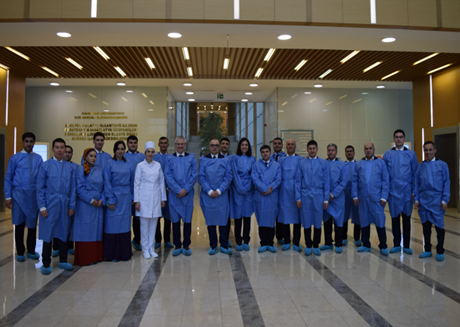
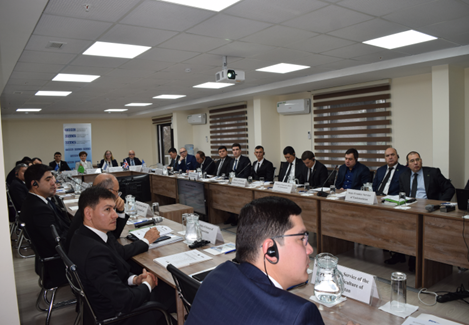
and engage in an interactive session on the national implementation of the BWC.
A tabletop exercise focusing on CBMs within the framework of the BWC provided participants with practical insight into the preparation, relevance and benefits of CBM reports for States Parties. The workshop further explored cross-cutting issues, including linkages and synergies between the Convention and other relevant multilateral instruments and initiatives. Participants were also informed of bilateral, regional and international cooperation and assistance opportunities to support the effective implementation of the Convention in Turkmenistan, with contributions from the ISU, the OSCE, the EU CBRN COE Initiative/Secretariat for Central Asia, UNODA’s UNSCR 1540 Support Unit, ICGEB and the WHO. Additional information on the BWC is available here.