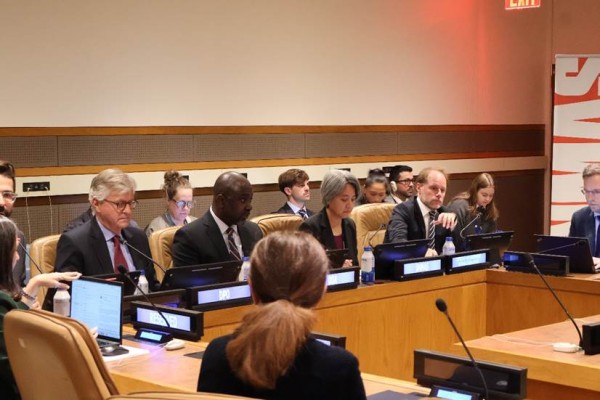
From 17-21 November 2025, the United Nations Office for Disarmament Affairs (UNODA), in cooperation with the German Federal Foreign Office, the Robert Koch Institute (RKI) and the Public Health Agency of Canada (PHAC)’s National Microbiology Laboratory, organized a training course on sampling and transport of toxic and infectious substances for the United Nations Secretary-General’s Mechanism for Investigations of Alleged Use of Chemical and Biological Weapons (UNSGM) in Berlin, Germany.
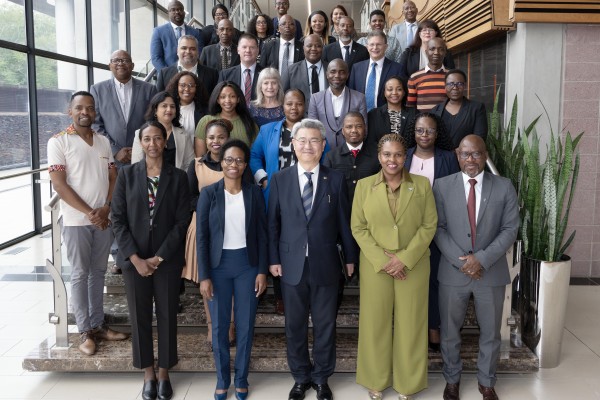
A group of 15 qualified experts nominated by Member States to the UNSGM roster from 14 countries joined the course. Through two separate modules, the course aimed to provide participating experts with a better understanding of guidelines and practices for sampling and transport of toxic and infectious substances in the context of a possible UNSGM investigation. The first module of the course was an International Air Transport Association (IATA) training on requirements for transporting toxic and infectious materials. The training was carried out by a certified IATA trainer and included a written exam. Participants who passed this exam received an IATA certificate, which is valid for two years.
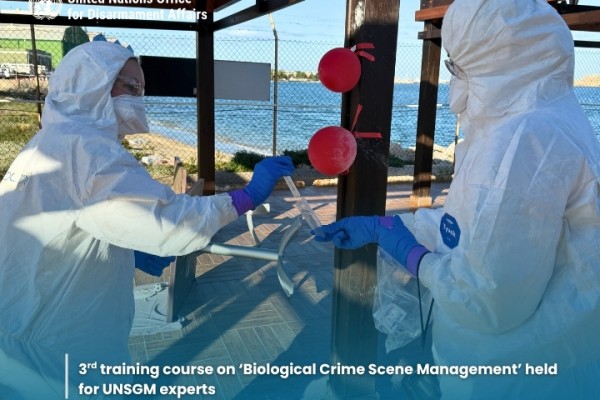
The second module focused on sampling within the context of a UNSGM investigation. A representative from UNODA provided a very brief overview of the relevant portions of the UNSGM Guidelines and Procedures. This was followed by representatives from PHAC providing instruction and training activities on sampling tools and techniques. The module concluded with a short tabletop exercise on biological sampling and a group activity on entry and sample planning, in which participants were asked to apply the knowledge acquired during the rest of the course.
In addition to the support provided by the RKI, German FFO and PHAC, financial support for the workshop was generously provided by the Government of Canada.
For more information on the UNSGM workshop, please contact the UNODA team in support of the UNSGM at UNSGM@un.org.
****************************************************************************************************************************
Du 17 au 21 novembre 2025, le Bureau des affaires de désarmement des Nations Unies (UNODA), en coopération avec le ministère fédéral allemand des Affaires étrangères, l'Institut Robert Koch (RKI) et le Laboratoire national de microbiologie de l'Agence de la santé publique du Canada (PHAC), a organisé à Berlin, en Allemagne, une formation sur l'échantillonnage et le transport de substances toxiques et infectieuses à l'intention du Mécanisme d'enquête du Secrétaire général des Nations Unies sur l'utilisation présumée d'armes chimiques et biologiques (UNSGM).
Un groupe de 15 experts qualifiés, désignés par les États membres pour figurer sur la liste de l'UNSGM, provenant de 14 pays, a participé à cette formation. À travers deux modules distincts, la formation visait à permettre aux experts participants de mieux comprendre les directives et les pratiques en matière d'échantillonnage et de transport de substances toxiques et infectieuses dans le cadre d'une éventuelle enquête de l'UNSGM. Le premier module du cours était une formation de l'Association internationale du transport aérien (IATA) sur les exigences relatives au transport de matières toxiques et infectieuses. La formation a été dispensée par un formateur certifié de l'IATA et comprenait un examen écrit. Les participants qui ont réussi cet examen ont reçu un certificat IATA, valable deux ans.
Le deuxième module portait sur l'échantillonnage dans le cadre d'une enquête menée par le Groupe des mesures spéciales des Nations Unies (UNSGM). Un représentant de l'ONUD a présenté un bref aperçu des parties pertinentes des lignes directrices et procédures de l'UNSGM. Les représentants de l'ASPC ont ensuite donné des instructions et dispensé une formation sur les outils et les techniques d'échantillonnage. Le module s'est terminé par un bref exercice théorique sur l'échantillonnage biologique et une activité de groupe sur la planification des entrées et des échantillons, au cours de laquelle les participants ont été invités à mettre en pratique les connaissances acquises pendant le reste du cours.
Outre le soutien apporté par le RKI, le FFO allemand et l'ASPC, le gouvernement du Canada a généreusement apporté son soutien financier à l'atelier.
Pour plus d'informations sur l'atelier UNSGM, veuillez contacter l'équipe de l'UNODA qui soutient l'UNSGM à l'adresse UNSGM@un.org.