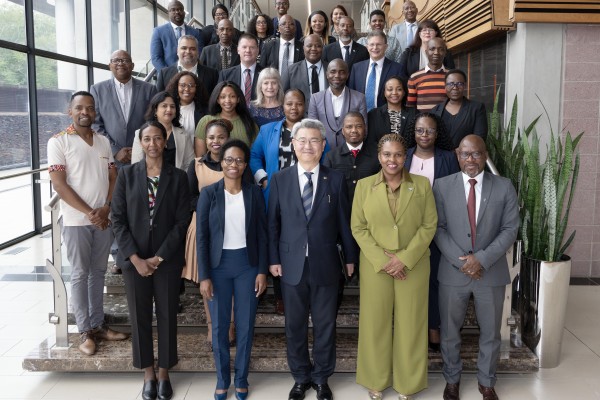
From 25 to 26 November 2025, in Port of Spain, Trinidad and Tobago, the United Nations Office for Disarmament Affairs (UNODA) and the Biological Weapons Convention (BWC) Implementation Support Unit (ISU) organized a regional workshop on strengthening the implementation of the BWC. The workshop was organized in cooperation with the Ministry of Foreign and CARICOM Affairs and the Ministry of Health of Trinidad and Tobago and was made possible with the financial support from the European Union.
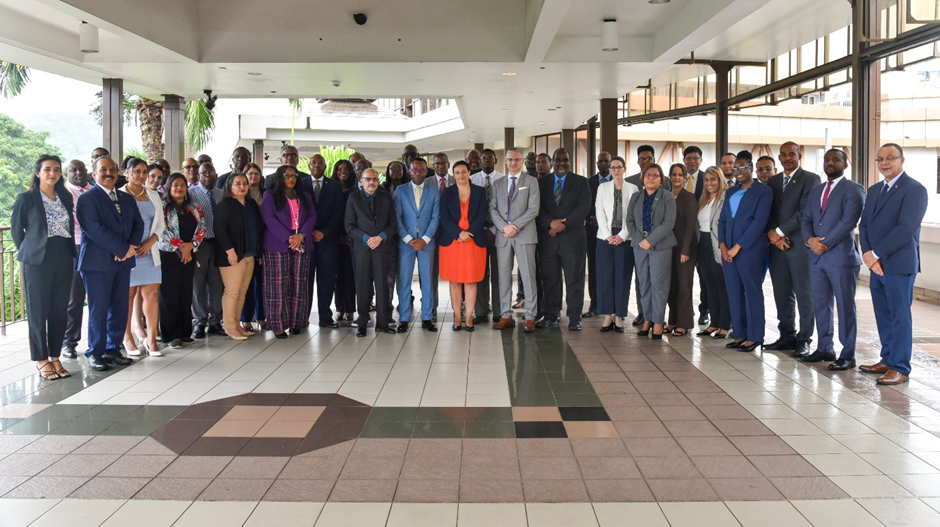
The workshop brought together representatives from 13 Caribbean States Parties to the Convention, i.e. Antigua and Barbuda, Barbados, Belize, Cuba, Dominican Republic, Grenada, Guyana, Jamaica, Saint Kitts and Nevis, Saint Lucia, Saint Vincent and the Grenadines, Suriname and Trinidad and Tobago. Haiti, which is a Signatory State to the Convention, also participated in the event. The workshop provided the participating Caribbean States a valuable opportunity to exchange on ways to strengthen the implementation of the Convention at the regional level.
The workshop began with opening remarks from Mr. Hasmath Ali, Acting Director of the Chemistry, Food and Drug Division of the Ministry of Health of Trinidad and Tobago, followed by Her Excellency Cécile Tassin, Ambassador of the European Union to the Republic of Trinidad and Tobago, Mr. Callixtus Joseph, Assistant Director Policy, Strategy and Innovation of the Caribbean Community (CARICOM) Implementation Agency for Crime and Security (IMPACS) and Mr. Alex Lampalzer, Deputy Chief of the BWC ISU.
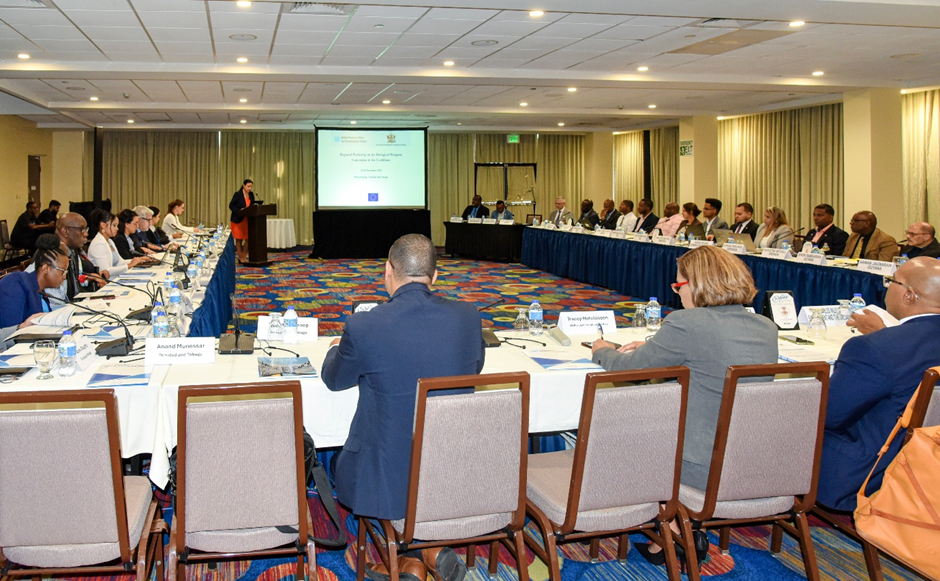
During the first day of the workshop, introductory presentations on the BWC, key aspects of national implementation and the roles and responsibilities of BWC National Contact Points (NCPs) were provided by UNODA and the BWC ISU. The delegations of Cuba, Guyana and Suriname shared their experiences, challenges encountered and best practices with regard to the national implementation of the Convention. Introductory presentations were also provided by the BWC ISU on the elaboration and submission of Confidence Building Measures (CBMs) reports. The delegations of Cuba, the Dominican Republic and Saint Kitts and Nevis shared insights on their national elaboration processes. Representatives from the Inter-American Committee Against Terrorism (CICTE) of the Organization of American States (OAS) and from CARICOM IMPACS presented on regional frameworks for strengthening biosafety, biosecurity and non-proliferation of biological weapons. Delegations particularly appreciated the opportunity for regional exchange and dialogue on BWC implementation aspects.
On the second day, the participating States engaged in interactive group exercises, during which they mapped out relevant contributing entities and discussed potential timelines for the elaboration process of CBMs. In addition, a representative of the 1540 Support Unit presented key obligations under UNSCR 1540 (2004) in relation to the BWC and on support to UNSCR 1540 implementation.
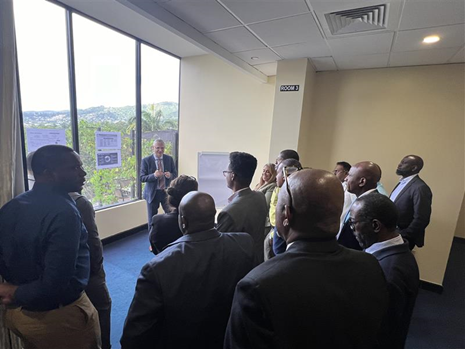
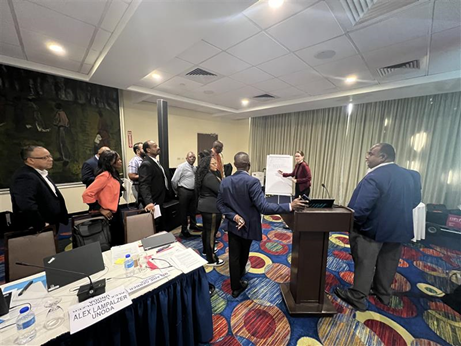
Workshop participants engaging in interactive exercises on the elaboration of CBM reports. Photo credit: Chen Wang, UNODA
Participating States also had the opportunity to hear from representatives from the Food and Agriculture Organization of the UN (FAO), the Pan American Health Organization (PAHO) / Regional Office for the Americas of the World Health Organization (WHO) and the World Organization for Animal Health (WOAH) about the respective mandates of their organizations as well as the importance of a One Health approach to biothreats.
Opportunities for further regional and international cooperation and assistance were shared by representatives of CARICOM IMPACS, CICTE-OAS, the Caribbean Public Health Agency (CARPHA), the Caribbean Society for Biosafety and Biosecurity (CSBB), the International Federation of Biosafety Associations (IFBA), UNODA’s Regional Centre for Peace, Disarmament and Development in Latin America and the Caribbean (UNLIREC) and the BWC ISU team.
The workshop concluded with closing remarks from Mr. Hasmath Ali of the Ministry of Health of Trinidad and Tobago and Mr. Alex Lampalzer, Deputy Chief of the BWC ISU.
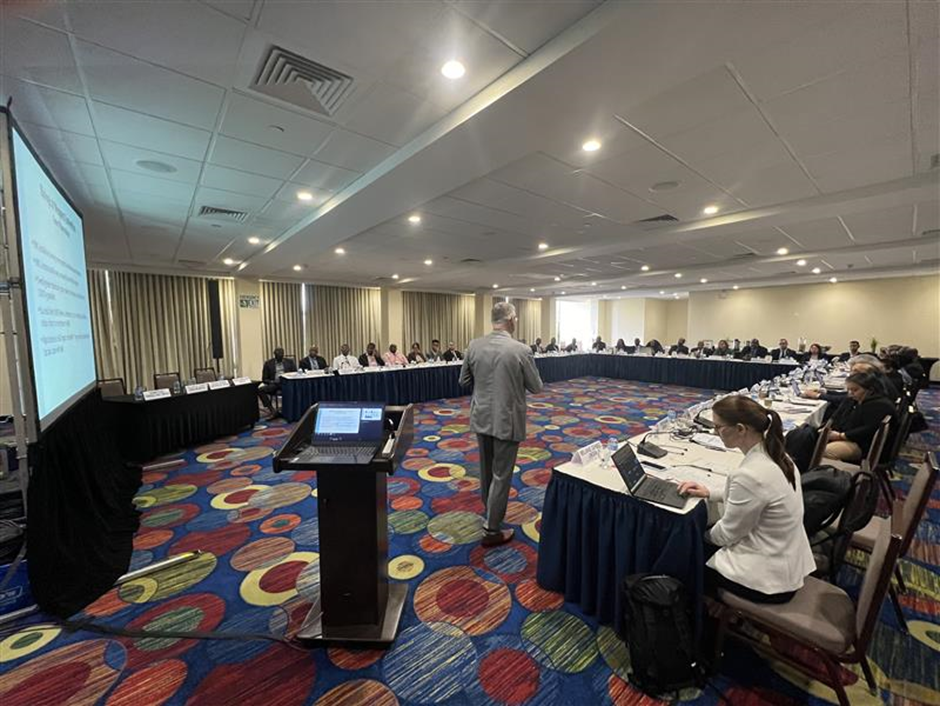
The regional workshop successfully raised awareness among participating States about the importance of the BWC and provided comprehensive information and resources to support its national implementation in the Caribbean. It fostered regional and international cooperation by facilitating the exchange of national experiences, challenges and best practices in implementing the Convention. It also encouraged greater participation of Caribbean States in discussions within the BWC framework. UNODA and the BWC ISU will be working closely with States to identify further national and regional needs, provide assistance and advance efforts towards the universalization of the BWC and strengthened implementation of the Convention in the Caribbean.