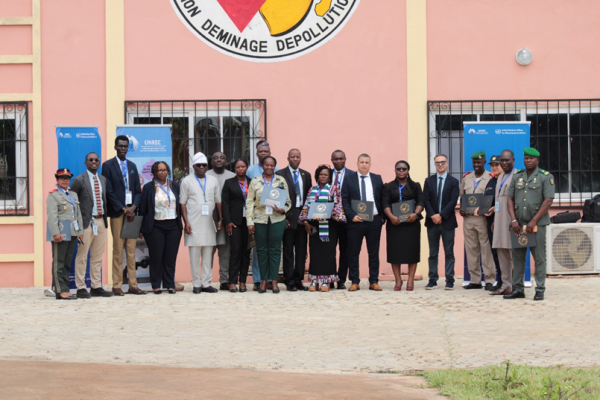
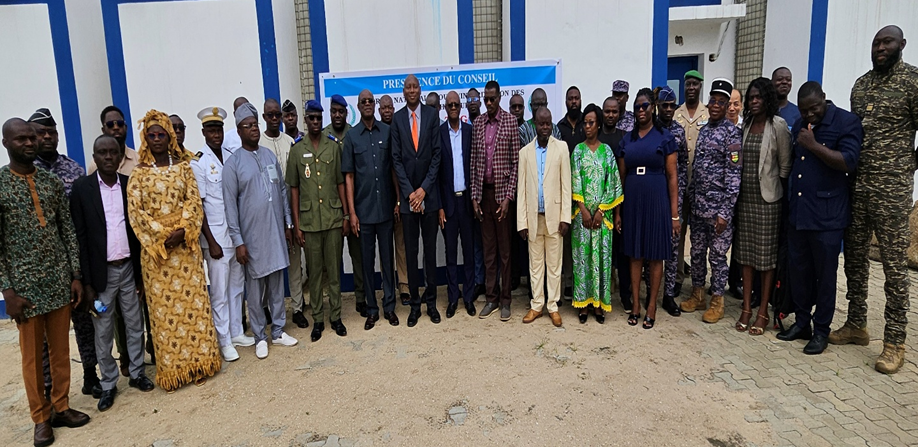
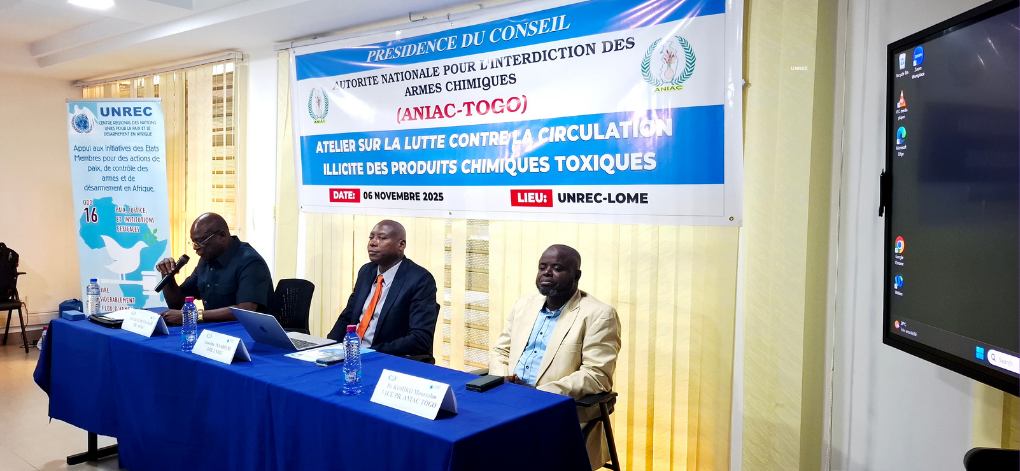
Lomé, 6 November 2025: The National Authority for the Prohibition of Chemical Weapons (ANIAC-TOGO), in collaboration with the United Nations Regional Centre for Peace and Disarmament in Africa (UNREC), held a strategic capacity-building workshop dedicated to securing the management of toxic chemicals.
The workshop aimed to evaluate and reinforce national mechanisms for controlling the transfer and use of hazardous substances, aligning with the implementation of the Chemical Weapons Convention (CWC). As a key regional partner, UNREC provided technical expertise to ensure that Togo’s chemical security strategies remain robust and responsive to emerging threats.
Opening the workshop, Colonel AKPAMOURA Koffi, President of ANIAC-TOGO, emphasized that effective chemical control is not merely a technical exercise but a cornerstone for building resilient and peaceful societies. He stressed the importance of inter-institutional synergy and a proactive approach in tackling the illicit circulation of dangerous products.
Strengthening National Ownership and Legislation
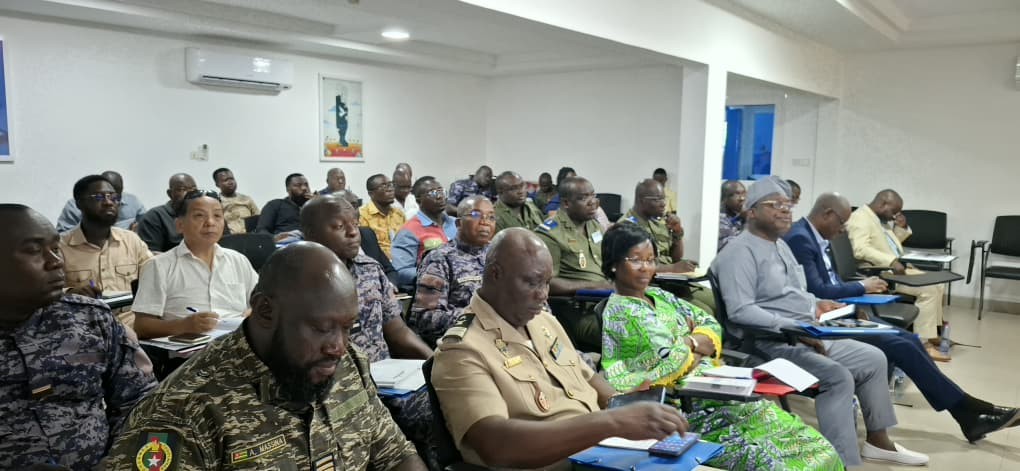
Throughout the workshop, the UNREC team and ANIAC experts engaged with a diverse range of 38 stakeholders, including technical ministries, Defense and Security Forces, and private sector representatives. The discussions focused on several strategic pillars:
- Legal Framework and Enforcement: Participants agreed on the necessity of addressing legal gaps to provide a robust basis for prosecuting chemical-related offenses.
- Technical Identification: The mission reviewed the use of specialized tools, such as the CAMEO (Computer-Aided Management of Emergency Operations) Chemicals and GMU (Emergencies Measures Guide) applications, to enhance the detection of toxic substances at borders.
- Coordinated Border Management: Strengthening the capacity of customs and security services was identified as a priority to ensure the long-term sustainability of the project’s achievements.
A Holistic Approach to Chemical Safety
Anselme Yabouri, Director of UNREC, noted that chemical security must be integrated into broader peace and development strategies. By ensuring the traceability of chemicals—from import to the management of hazardous waste—Togo can protect its citizens in a better way and foster an environment conducive to sustainable growth.
The workshop also highlighted the progress made in establishing a dedicated 10 acres chemical waste treatment site in the Plateaux region, reflecting a strong national commitment to environmental and human safety.
Key Takeaways
The initiative aimed to strengthen chemical security in Togo through enhanced traceability throughout the product lifecycle, capacity building for judicial police officers for a better prosecution of illicit trafficking and consolidated regional cooperation with UNODA and UNREC in the implementation and respect of the CWC (Chemical Weapons Conventions) commitments.
The event concluded with participants reaffirming their commitment to a coordinated and secure management of chemicals in Togo.