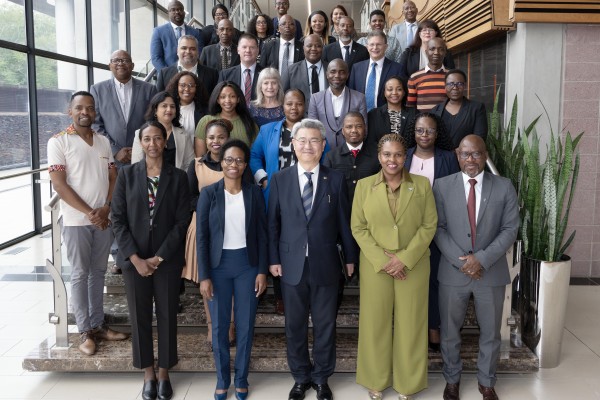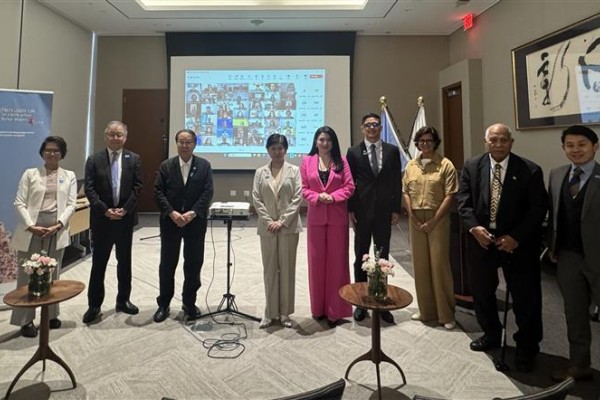
From 2 to 4 December 2025, the United Nations Office for Disarmament Affairs (UNODA), in partnership with the Republic of South Africa, the European Union Partner-to-Partner Export Control Programme for Dual-Use Goods (EU P2P), and the German Federal Office for Economic Affairs and Export Control (BAFA), convened a Regional Workshop on Strategic Trade Management of Dual-Use Items at the South African Department of International Relations and Cooperation in Pretoria.
The workshop marked a significant step toward strengthening regional capacities to develop and sustain effective systems for managing trade in dual-use goods, materials, and technologies—critical to preventing their diversion and illicit trafficking in line with UN Security Council resolution 1540 (2004) and other instruments on nuclear, chemical, and biological weapons disarmament and non-proliferation.
The event brought together 34 representatives from 14 African States—including Angola, Botswana, Egypt, Ghana, Kenya, Madagascar, Mauritius, Morocco, Namibia, Nigeria, South Africa, Tanzania, Tunisia, and Zambia—alongside international partners.
Participants shared national experiences and approaches to building strategic trade management systems, including legal and regulatory frameworks, control lists, enforcement measures, and inter-agency coordination mechanisms. These exchanges highlighted varying levels of progress across the continent—from mature systems to emerging models—creating a valuable platform for peer learning and context-specific solutions.
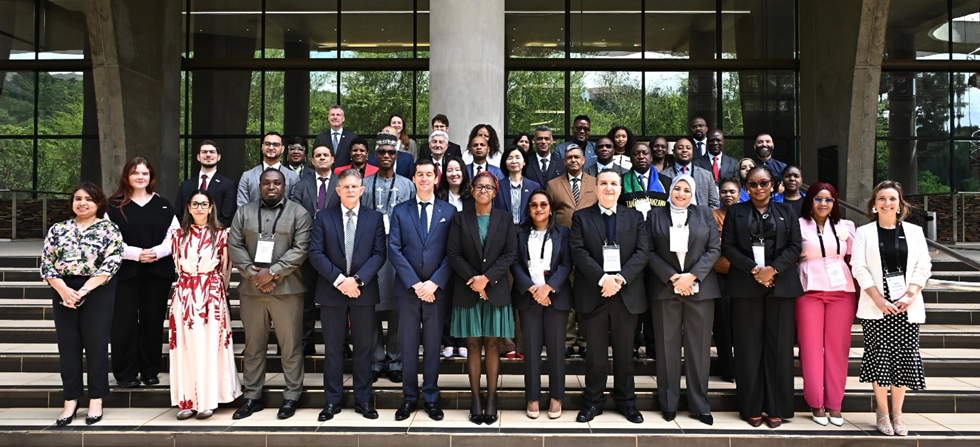
Discussions examined States’ perspectives on incentives for implementation, reflecting growing awareness and commitment across the continent to strategic trade management as a means not only to meet international non-proliferation obligations but also to advance national security and development objectives. Security and economic benefits highlighted by States included mitigating proliferation risks, countering terrorism and transnational crime, improving trade relations, and fostering conducive regulatory environments for safe and secure trade in and use of dual-use goods and technologies.
Participants also examined common challenges such as resource constraints, fragmented institutional efforts, and misconceptions about regulatory impacts. Proposed solutions ranged from benchmarking and risk assessments to enhanced inter-agency coordination and partnerships with industry and academia. Participants further underscored the importance of context-specific approaches, tailored international assistance, and intra-regional peer learning and cooperation. Emphasis was placed on leveraging regional frameworks and mechanisms to promote harmonized practices, particularly those established under regional economic communities, customs unions, and the African Continental Free Trade Area (AfCFTA) Agreement.
In addition to the workshop sessions, participants visited Protechnik Laboratories—a multidisciplinary chemical and biological defence research and development facility—where they engaged with staff and management to learn about the laboratory’s capabilities and gain practical insights into its operations.
This initiative reinforced cooperation between South Africa, UNODA, BAFA, and the EU P2P Programme, demonstrating a unified commitment to supporting African States in fulfilling their non-proliferation obligations and enhancing strategic trade management systems.
The workshop was made possible through in-kind support from the Republic of South Africa and voluntary contributions from the Federal Republic of Germany, the Republic of Korea, and the European Union.
For more information, please contact UNODA’s 1540 Support Unit (unoda-1540-unhq@un.org).