Accra, Ghana, 27–28 January 2026
UNODA Director Adedeji Ebo participated in the West and Central African Regional Conference on the Universalization and Implementation of the Treaty on the Prohibition of Nuclear Weapons (TPNW), held in Accra, Ghana, on 27 January. Hosted by the Government of Ghana with support from Austria and the International Campaign to Abolish Nuclear Weapons (ICAN), the conference brought together representatives from 19 countries, including several States that have not yet signed or ratified the Treaty.
In his opening remarks, Director Ebo recalled the enduring words of Osagyefo Dr. Kwame Nkrumah at the first summit of the Non-Aligned Movement in 1961: “This Conference should call on the powers of the world to disarm. They must disarm to ensure that they are unable to strike against each other… if you want peace, stop preparing for war.” “Six decades later, his words still resonate,” Director Ebo noted. “Nuclear weapons have not been abolished, and nuclear annihilation remains a global threat. Africa’s leadership and moral authority compel us to continue championing disarmament.”
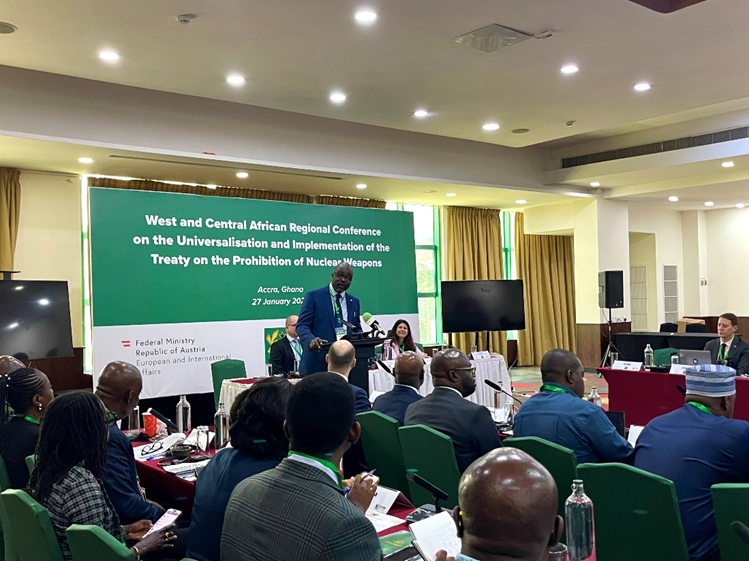
During the conference, participants shared experiences and updates on national ratification processes, discussed implementation challenges, and highlighted needs for technical or political support. Some Member States expressed concern over Non-State Actors’ access to materials related to weapons of mass destruction (WMD), emphasizing the importance of aligning regional efforts with UNSCR 1540 and other international nonproliferation instruments. UNODA will explore deeper partnership and coordination opportunities with ICAN and regional actors to strengthen support for nuclear disarmament and non-proliferation.
Director Ebo also reminded participants of Africa’s unique position: “African states have turned their back on nuclear armament even when some argued it was the currency of power. This provides Africa with a strong moral authority and thereby the obligation to play a leading role in multilateral nuclear disarmament.”
He cited historical lessons, including nuclear tests in the Sahara between 1960 and 1966, which caused lasting harm to populations and the environment, underlining that nuclear risks know no borders. He emphasized the practical purpose of the conference: “Our task is to ensure robust implementation: translating the treaty’s provisions into practical steps for education, victim assistance, environmental remediation, and continued pressure on States that possess nuclear weapons to change course. All our nations are endangered by these weapons, and our work here contributes to a safer, more just, and more peaceful world.”
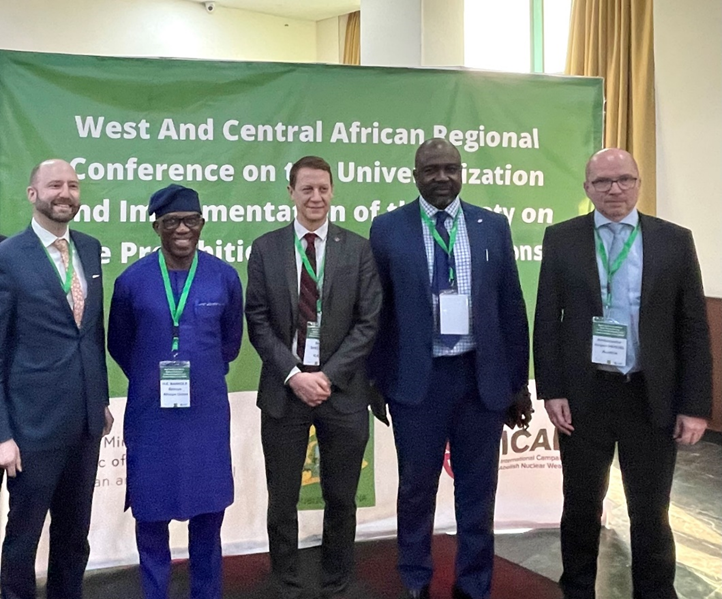
Ahead of the conference, Director Ebo held a courtesy meeting with UN Resident Coordinator Zia Choudhury to discuss peace and security dynamics in Ghana and the wider West African and Sahel regions. Discussions focused on emerging risks, including illegal mining, land disputes, cattle rustling, cyber threats, and mis- and disinformation, and their intersection with armed violence. The Resident Coordinator highlighted national priorities and the importance of strengthening UN coordination, reinforcing national ownership, and operationalizing field-level frameworks. UNODA will follow up on these issues, including supporting the upcoming strategic review of the UN Sustainable Development Cooperation Framework in Ghana.
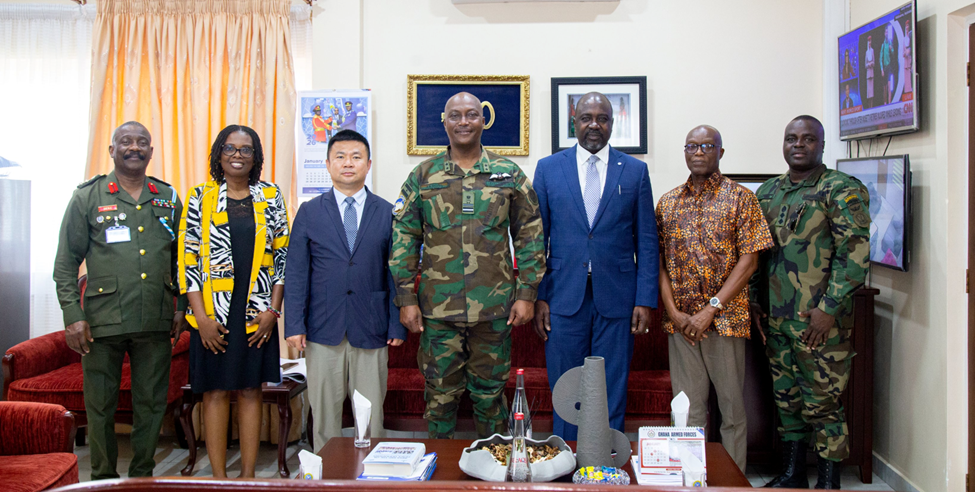
On 28 January, Director Ebo also met with Air Vice Marshal Akrong, Commandant of the Kofi Annan International Peacekeeping Training Centre (KAIPTC), to explore deepening collaboration with regional training institutions. Discussions focused on opportunities to regionalize disarmament and non-proliferation efforts and enhance operational impact across West Africa, and the continent more broadly. They also discussed emerging regional security challenges, such as the weaponization of AI, cybersecurity, unmanned aerial vehicles, and WMD regimes (nuclear, chemical, and biological). They agreed to pursue closer coordination and cooperation, including through UNODA’s Regional Centre for Peace and Disarmament in Africa.
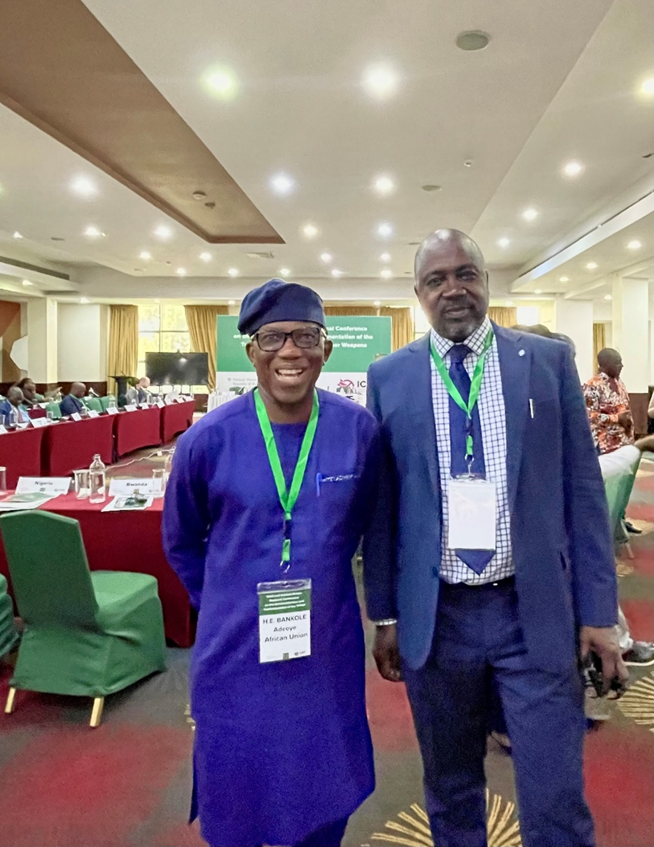
Finally, Director Ebo exchanged with AU Ambassador Bankole Adeoye about the AU Disarmament Fellowship Programme, Africa Amnesty Month, and ODA–AU’s collaboration under the established coordination matrix.
UNODA’s mission to Accra reinforced its commitment to strengthening regional partnerships, supporting TPNW implementation, and fostering collaboration with regional institutions, civil society, and international partners — translating global disarmament norms into actionable, country-driven initiatives that advance peace, security, and sustainable development.