Displaying 61 - 70 of 101
Building the global norm against biological weapons: the 1925 Geneva Protocol and the 1972 Biological Weapons Convention
From 24 to 28 February 2025, the United Nations Office for Disarmament Affairs (UNODA) Geneva Branch and the Implementation Support Unit (ISU) of the Biological Weapons Convention (BWC) hosted a commemorative exhibition at the Palais des Nations. Marking the centenary of the 1925 Geneva Protocol and the fiftieth anniversary of the entry into force of the BWC, the exhibition highlighted the efforts of multiple stakeholders to build the global norm against the use of biological weapons and emphasized the continued relevance of these two milestone agreements in maintaining global…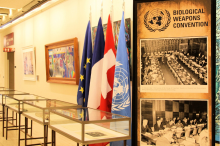
Sustaining the fight against the illicit proliferation of Small Arms and Light Weapons in The Gambia
A delegation of the United Nations Regional Centre for Peace and Disarmament in Africa (UNREC) travelled to Banjul from 27 to 31 January. The main objective of their Mission was threefold: i) assess the institutional capacities of the recently established National Commission on Small Arms and Light Weapons (SALW); ii) support for the development of a national action plan on SALW; and iii) foster stronger collaboration among national stakeholders and with the United Nations Country Team. The mission took place in the context of the implementation of the EU funded project, entitled “United…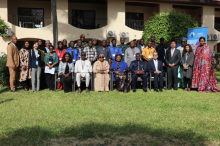
Parliamentarians from African States not party to the Biological Weapons Convention gather in support of universalisation
On 10 and 11 February, the United Nations Office for Disarmament Affairs (UNODA) and the Inter-Parliamentary Union (IPU) welcomed parliamentary delegations from Chad, Comoros, Djibouti, Egypt and Somalia, five of the six African States not yet party to the Biological Weapons Convention (BWC), to Geneva for a high-level seminar in support of universalisation. The seminar focussed on raising awareness about the importance of BWC universalisation and sought to encourage broad regional and international cooperation to that end. Delegates with His Excellency Ambassador Frederico S. Duque…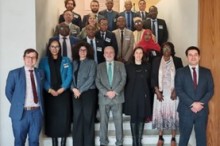
Call for Papers: The impact of the global increase in military expenditure on the achievement of the sustainable development goals
In the Pact for the Future, adopted by the General Assembly in September 2024, Member States voiced their concern about the potential impact that the global increase in military expenditures could have on investments in sustainable development and sustaining peace. To that end, the General Assembly requested the Secretary-General to “provide analysis on the impact of the global increase in military expenditure on the achievement of the Sustainable Development Goals by the end of the seventy-ninth session”. With the aim of encouraging engagement and reflection on this subject by Member…
Mauritania strengthens national implementation of the Biological Weapons Convention
From 13 to 14 January 2025 in Nouakchott, the United Nations Office for Disarmament Affairs (UNODA) and the Radiation Protection, Nuclear Safety and Security Authority (ARSN) of Mauritania jointly organized a national workshop on strengthening the implementation of the Biological Weapons Convention (BWC). This was the first workshop of its kind in Mauritania since it joined the BWC in 2015. Mauritania has made significant progress towards BWC implementation prior to the event including the nomination a BWC National Contact Point (NCP) in 2023 and the submission of its first…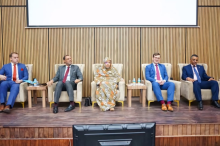
African Amnesty Month: Djibouti launches activities to ‘Silence the Guns’
The United Nations Regional Centre for Peace and Disarmament in Africa (UNREC) took part in the launch of the African Amnesty Month (AAM) in Djibouti from 29th to 31st October, along with the Regional Centre on Small Arms (RECSA), which also represented the African Union. During the three-day mission, several activities were held to raise awareness about the fight against the illicit trade and use of Small Arms and Light Weapons (SALW). These included planting trees at Camp Lemonnier;a march from Camp Lemonnier to the National police shooting range; the…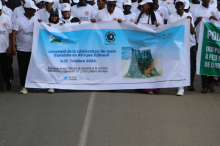
15th Anniversary of the Jeju Process
The Republic of Korea-United Nations Joint Conference on Disarmament and Non-Proliferation Issues, also known as the “Jeju Process”, is now one of the longest continuous annual disarmament conference series that the UN has with any member state. Since 2002, the Conference – organised by the United Nations Regional Centre for Peace and Disarmament in the Asia-Pacific and the Republic of Korea’s Ministry of Foreign Affairs – has been a forum for candid and constructive exchanges of views between Government officials, independent experts, scholars and civil society representatives from…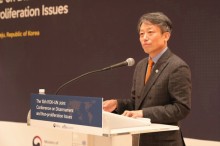
Armed private security in Latin America and the Caribbean: Oversight and accountability in an evolving context
Regional study about armed private security in Latin America and the Caribbean On 27 October, the United Nations Regional Centre for Peace, Disarmament and Development in Latin America and the Caribbean (UNLIREC) and the Geneva Centre for the Democratic Control of Armed Forces (DCAF) organized a side event on armed private security in Latin America and the Caribbean, in the United Nations Headquarters in New York. Mr. Christoph Anton, Counsellor from the Permanent Mission of Germany moderated the panel. In his opening remarks, he highlighted the important role of private security…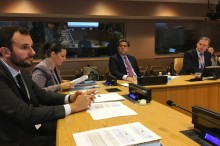
High Representative Commemorates UNRCPD’s Resumption of Operations in Kathmandu and Re-launches the “Kathmandu Process”
The unveiling of the commemorative plaque On 21 November, the Foreign Minister of Nepal, Dr. Prakash Sharan Mahat, and the Under-Secretary-General and High Representative for Disarmament Affairs, Mr. Kim Won-soo, unveiled a plaque commemorating the resumption of operations of the Regional Centre for Peace and Disarmament in Asia and the Pacific (UNRCPD) in its new premises in Kathmandu, following its temporary relocation after the 2015 devastating earthquakes in Nepal. On this occasion, the Regional Centre also re-launched the “Kathmandu Process” — a dialogue among States…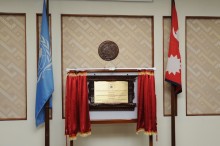
Teaching Educators about Nuclear Disarmament
On November 8, the United Nations Office for Disarmament Affairs and Hibakusha Stories, an initiative of Youth Arts New York held its fifth annual “Hiroshima and Nagasaki: Creating Curriculum for nuclear disarmament” workshop for 29 New York City high school teachers from 13 different schools at UN Headquarters. The session is offered on a day the New York City Department of Education sets aside for teachers to further their professional skills while their schools are used as polling places. The day began with a tour of the disarmament exhibit and the General…